Menopause averted a midlife energetic crisis with help from older children and parents: A simulation study

Ed Hagen

Washington State University

February 26, 2026

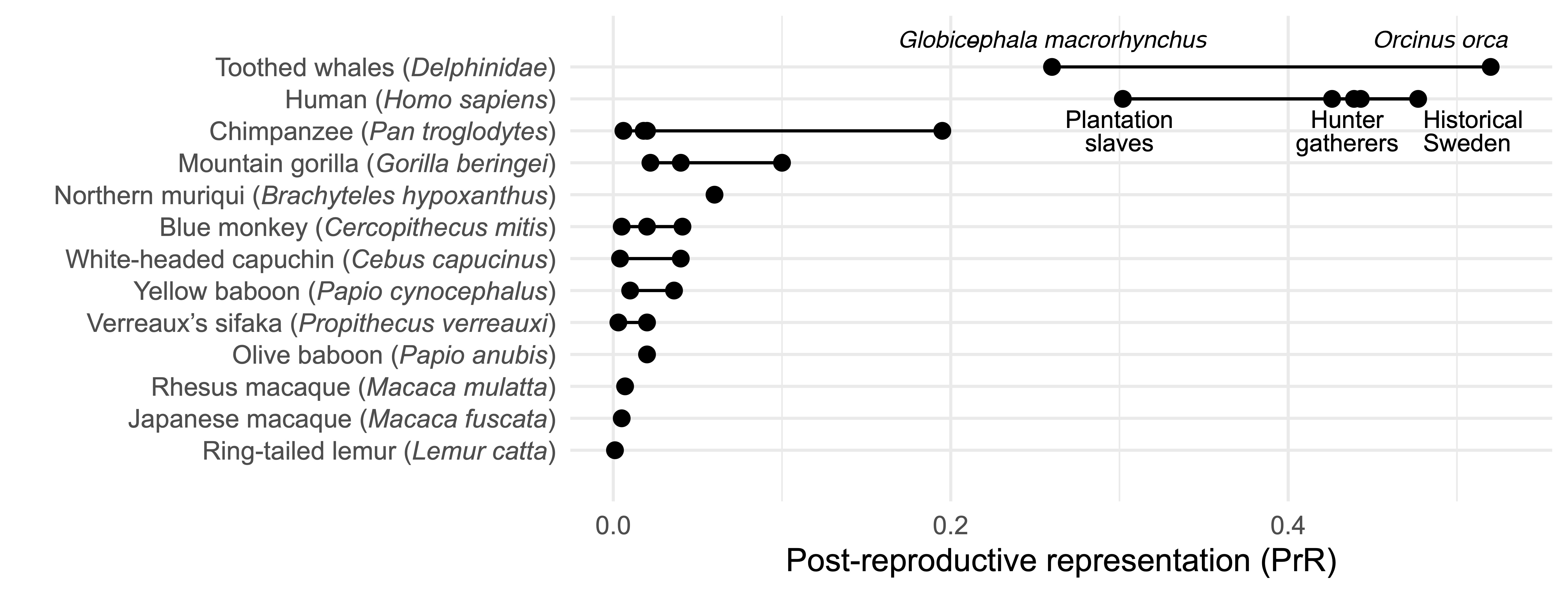
Menopause is rare

Wood et al. (2023)

Testing two less well-known theories of menopause based on a sexual division of labor

The “absent father” hypothesis (Kuhle 2007)

  • Humans reproduce in long-term marriages with a sexual division of labor
  • Husbands sometimes abandon older wives for younger wives
  • Male mortality is higher than female mortality, and husbands are often older, so more likely to die than wives
  • Both of these could have left women without the resources to raise offspring
  • Menopause would have limited the childrearing burden placed on older single mothers

The “two sex” embodied capital model of menopause (Kaplan et al. 2010)

  • Humans evolved to exploit a highly knowledge- and skill-based “niche” providing energy-rich but difficult to extract resources
  • This niche required the rearing of slow-developing, large-brained, and thus energetically expensive offspring
  • The energetic burden was met in long-term marriages with a sexual division of labor
  • The physiological costs of pregnancy & childbirth increased with age, and oocyte quality decreased with age; productivity increased with age.
  • At midlife the fitness benefits of downward intergenerational transfers of resources by both parents, whose acquisition was based on four decades of skill development outweighed the fitness benefits of continued offspring production.

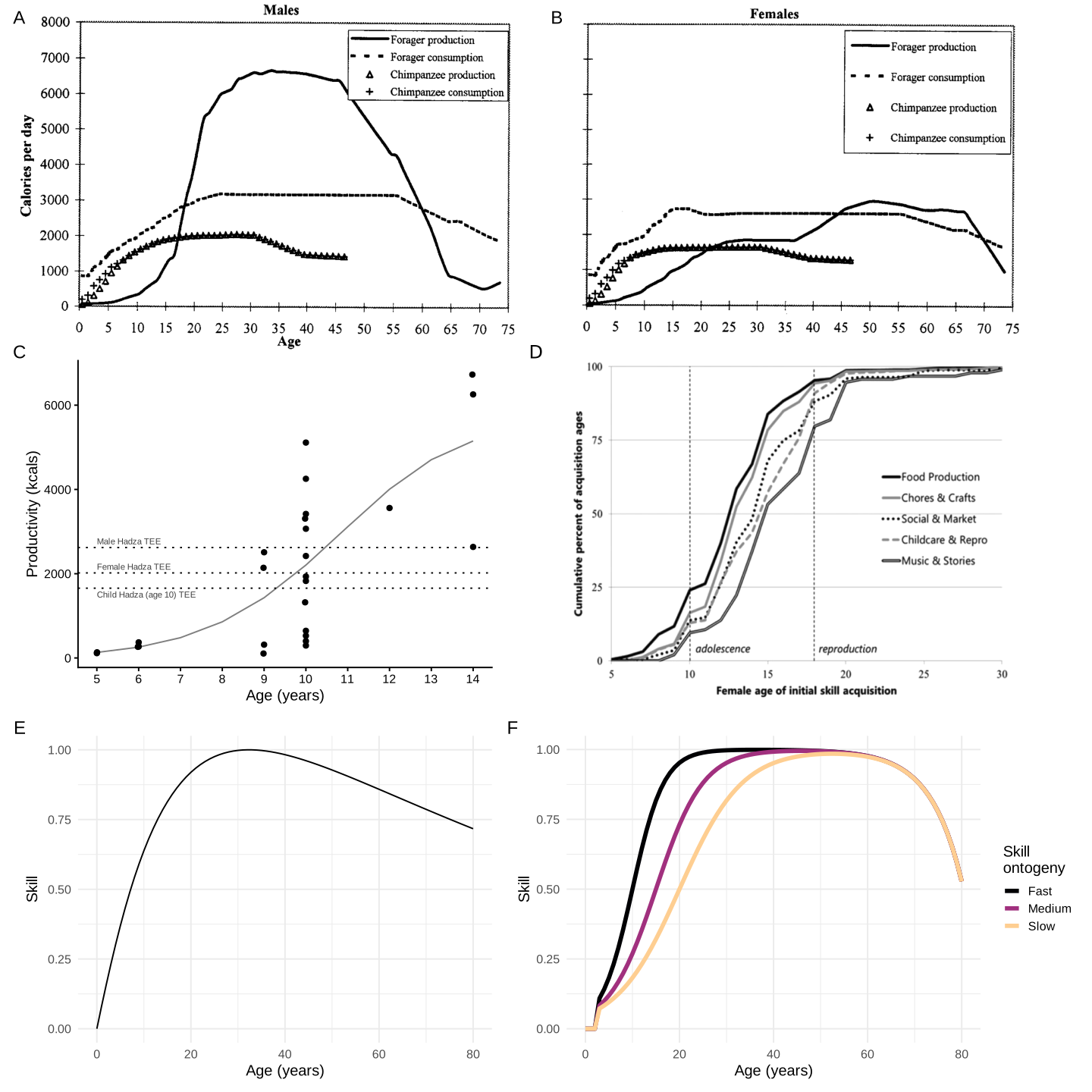
New data on the ontogeny of foraging skills
Simulating hunter-gatherer families

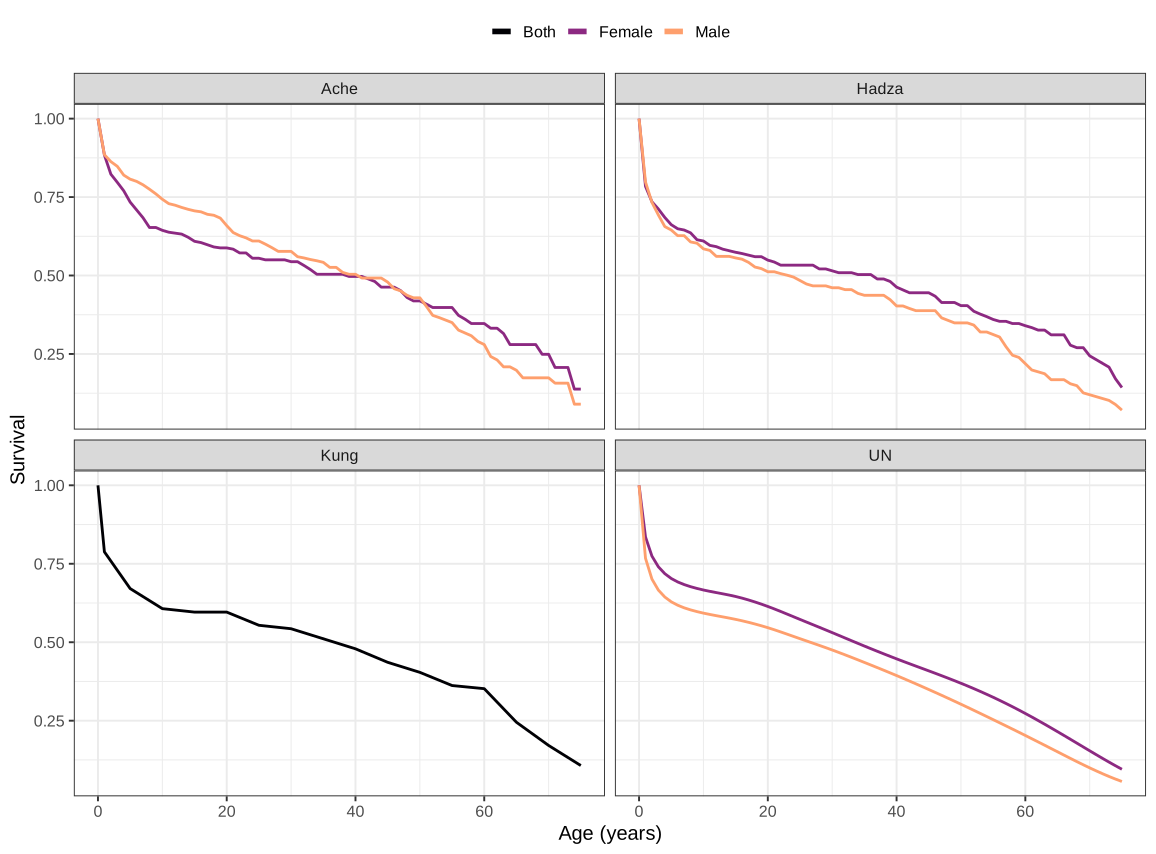
Age- and sex-specific survivorship (mortality)
Age at first birth (AFB), age at last birth (menopause), and interbirth interval (IBI)

Values averaged from the Ache, Agta, Hadza, Hiwi, and !Kung (Davison and Gurven 2021)

  • Age at first birth: 20
  • Interbirth interval: 3 years
  • Age at menopause: 38
  • Maximum lifespan: 80 years

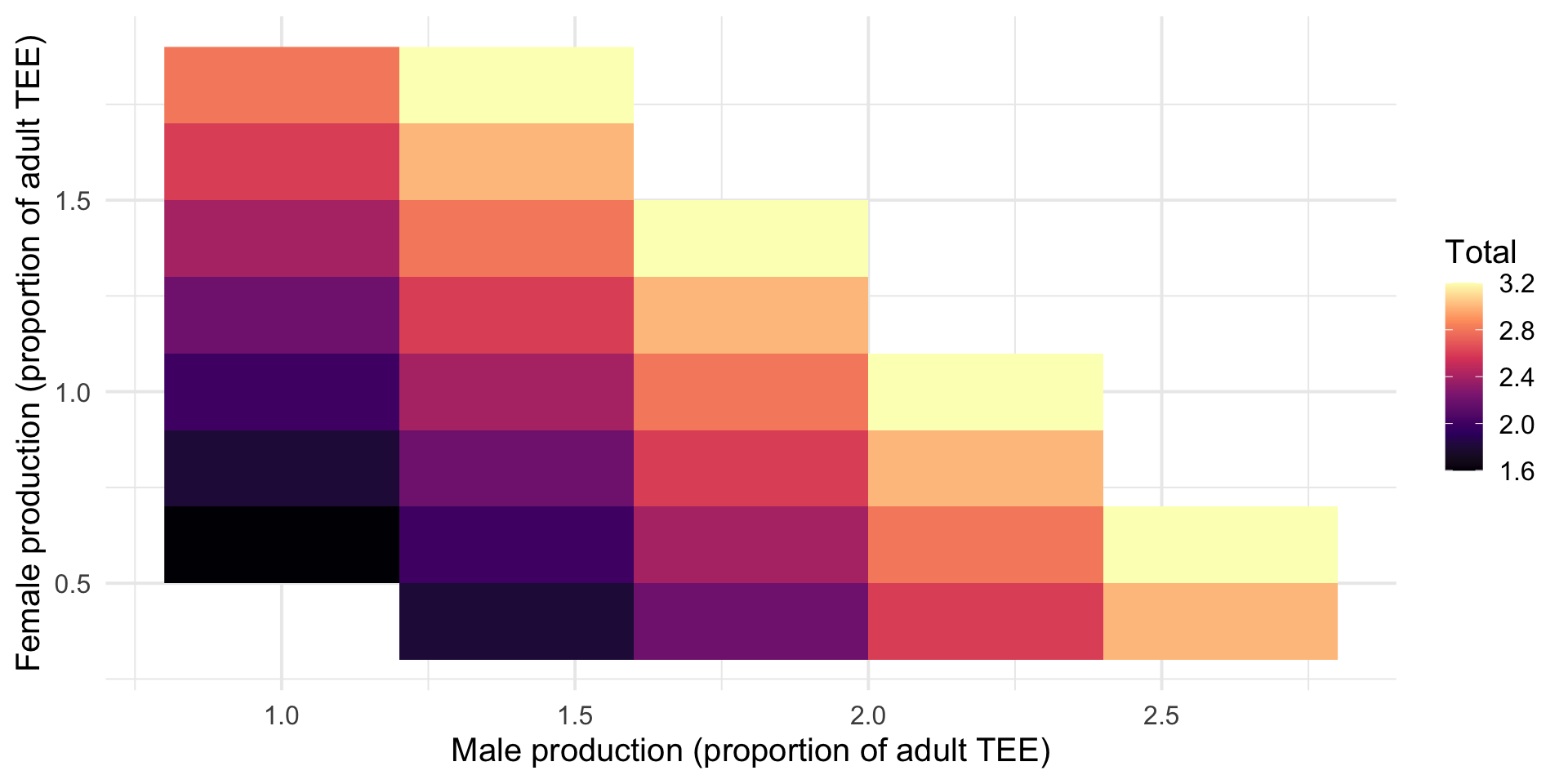
Hunter-gatherer family energy consumption
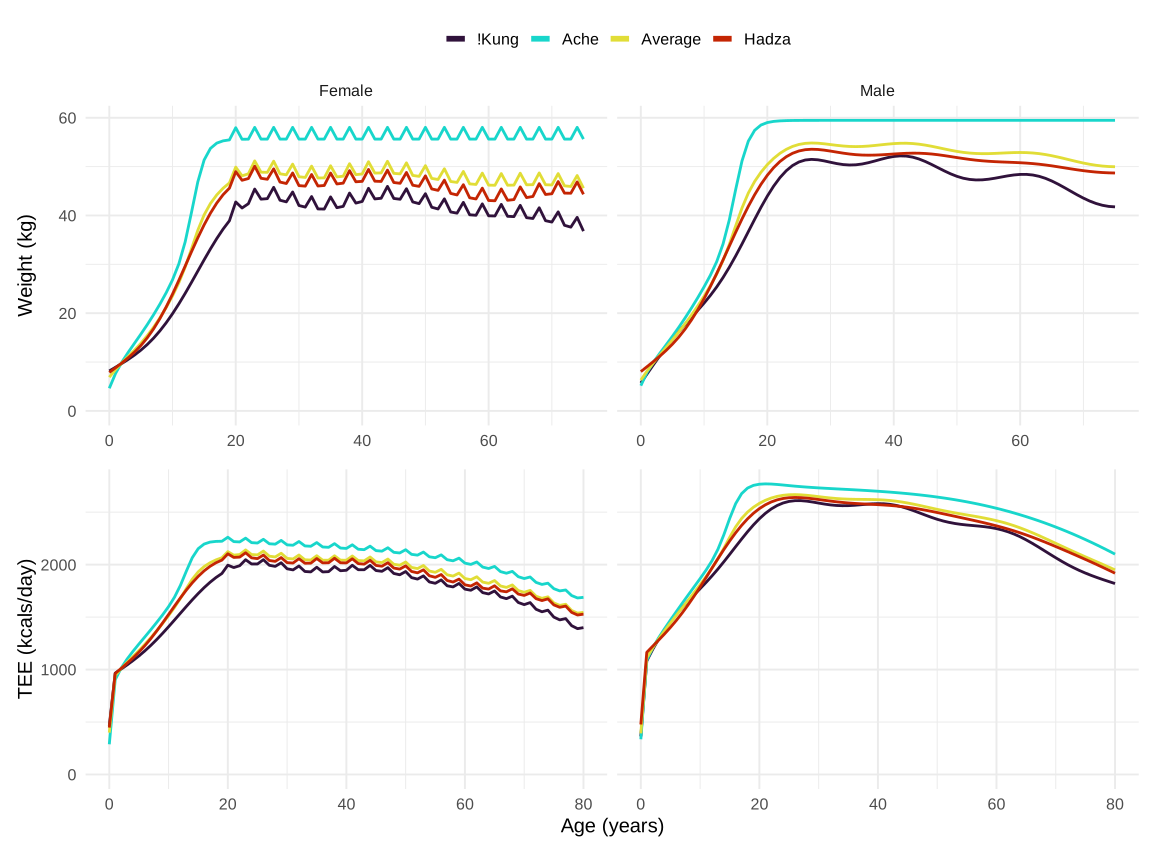
Total energy expenditure (TEE) from global samples using doubly labeled water (Pontzer et al. 2021; Bajunaid et al. 2025)

Hunter-gatherer energy production
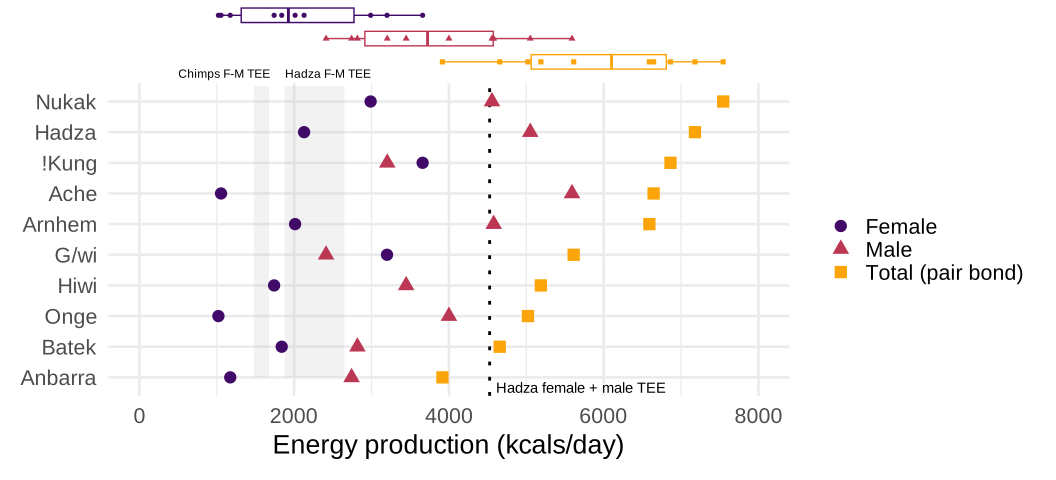
Kraft et al. (2021)

Hunting and gathering skill ontogeny
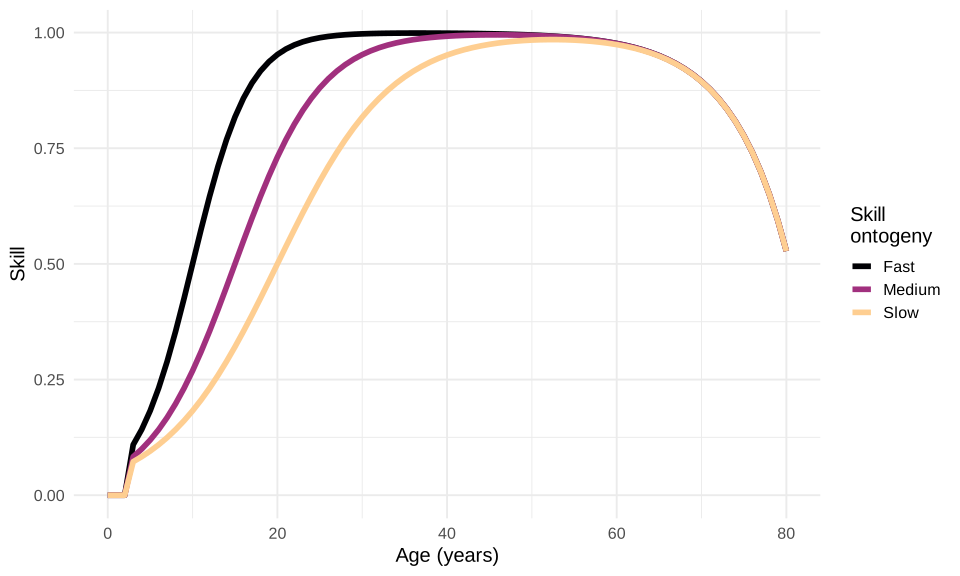
Skill ontogeny \(b_1\) 50% 95%
Fast 0.40 10 17
Medium 0.25 15 27
Slow 0.15 20 40

Parent joint energy production

Results

Family size

Family consumption and production
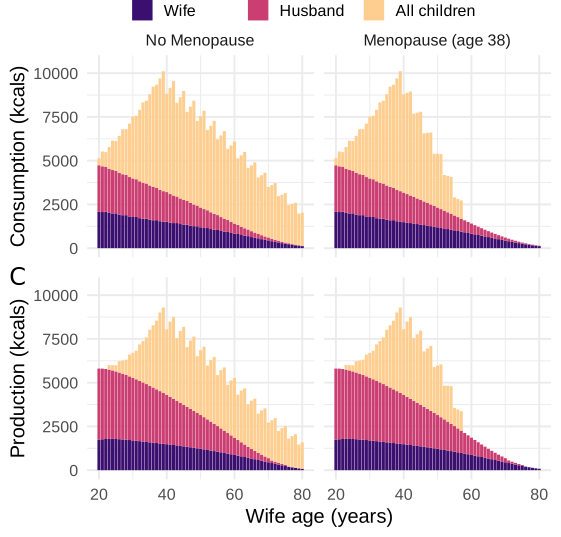
Energy balance
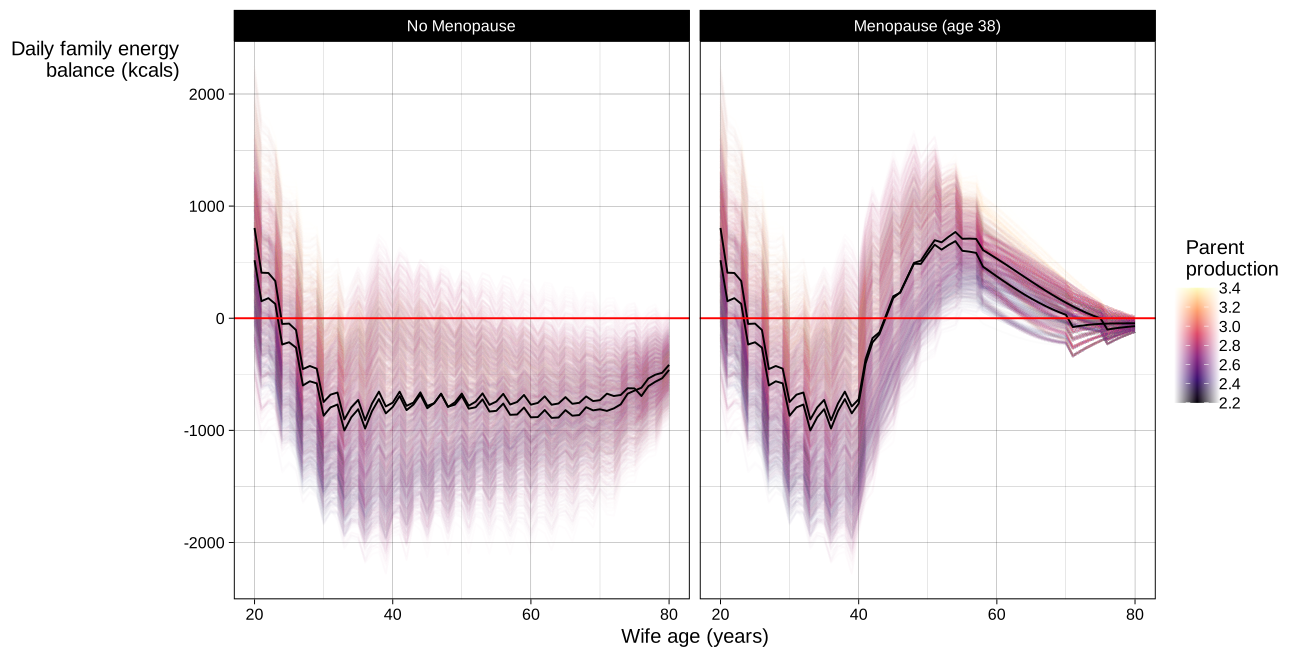
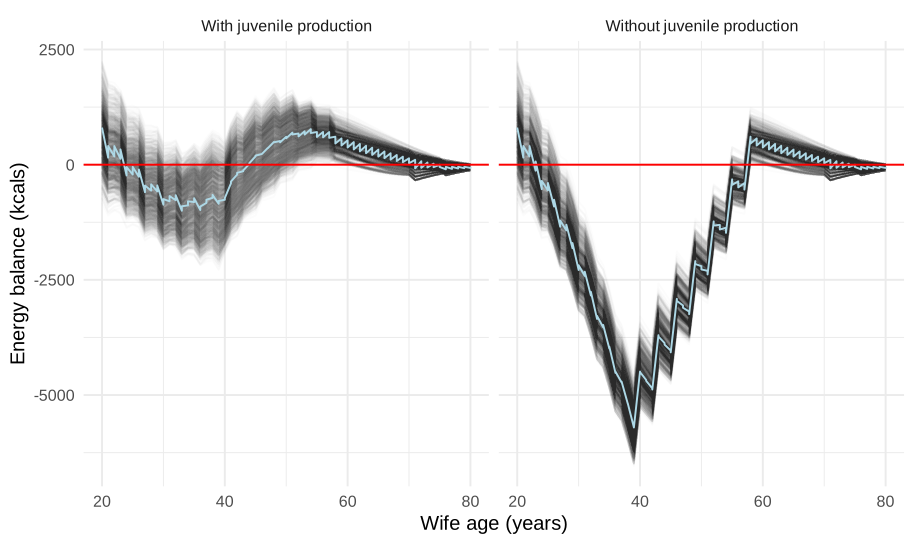
Menopause with and without child production

The mismatch?
Parent mortality

At age 50:

  • 60% of wives have survived
  • 46% of their older husbands have survived.
  • Thus, only about 1 parent remains to care for offspring
  • Menopause: A mean of 1.5 older children (ages 12 and/or 15)
  • No menopause: A mean of 3.5 children, some quite young (e.g., 2, 5, and 8)

It’s parent absence, not father absence, that mattered

Concluding remarks

Relatively rapid reproduction of slow developing, energetically expensive offspring threatened to plunge families into energy deficit

Young couples without kids produced a surplus, perhaps subsidizing the wife’s younger siblings (bride service)

Menopause limited family size to a sustainable level

Maturing offspring began to support themselves early on

Older parents with few offspring produced a surplus, subsidizing their children’s families

Results are generally consistent with ECM and the grandmother hypothesis

Mismatch: In WEIRD societies, kids often don’t support themselves or their siblings, motivating smaller families?

Byproduct theories of menopause

  • artifacts of unusually benign environments (e.g., captivity, recent improvements in public health) that extend lifespan but not fertility
  • epiphenomenon of antagonistic pleiotropy
  • artifacts of selection for male longevity that extended female lifespan but not fertility

Adaptive theories of menopause

  • grandmother hypothesis, in which the benefits of investing in grandchildren outweighed the fitness benefits of producing more children
  • the mother hypothesis, in which the benefits of maintaining investment in multiple slow-developing offspring outweighed the increasing risk of maternal morbidity and mortality from continued reproduction
  • the “aging eggs” hypothesis, in which increased risk of chromosomal abnormalities selected for a cessation of reproduction
  • avoidance of breeding competition with genetic kin.

Hunter-gatherer energy production

\[ \mathrm{productivity}(age) = \mathrm{TEE}_{prop} \mathrm{strength}(age)^\alpha \mathrm{skill}(age)^{1 - \alpha} \qquad(1)\]

\[ \mathrm{strength}(age, sex) = \frac{\mathrm{weight}(age, sex) (1 - e^{b_0 (age_{\mathrm{max}}-age)})}{\mathrm{weight}_{\mathrm{max}}} \qquad(2)\]

\[ \mathrm{skill}(age) = \frac{1}{1 - e^{-b_1(age - age_{50})}} (1 - e^{b_0(age_{\mathrm{max}}-age)}) \qquad(3)\]

References

Bajunaid, Rania, Chaoqun Niu, Catherine Hambly, Zongfang Liu, Yosuke Yamada, Heliodoro Aleman-Mateo, Liam J. Anderson, et al. 2025. “Predictive Equation Derived from 6,497 Doubly Labelled Water Measurements Enables the Detection of Erroneous Self-Reported Energy Intake.” Nature Food 6 (1): 58–71. https://doi.org/10.1038/s43016-024-01089-5.
Davison, Raziel J., and Michael D. Gurven. 2021. “Human Uniqueness? Life History Diversity Among Small-Scale Societies and Chimpanzees.” Edited by Masami Fujiwara. PLOS ONE 16 (2): e0239170. https://doi.org/10.1371/journal.pone.0239170.
Kaplan, Hillard, Michael Gurven, Jeffrey Winking, Paul L. Hooper, and Jonathan Stieglitz. 2010. “Learning, Menopause, and the Human Adaptive Complex.” Annals of the New York Academy of Sciences 1204 (1): 30–42. https://doi.org/10.1111/j.1749-6632.2010.05528.x.
Kraft, Thomas S., Vivek V. Venkataraman, Ian J. Wallace, Alyssa N. Crittenden, Nicholas B. Holowka, Jonathan Stieglitz, Jacob Harris, et al. 2021. “The Energetics of Uniquely Human Subsistence Strategies.” Science 374 (6575). https://doi.org/10.1126/science.abf0130.
Kuhle, Barry X. 2007. “An Evolutionary Perspective on the Origin and Ontogeny of Menopause.” Maturitas 57 (4): 329–37.
Pontzer, Herman, Yosuke Yamada, Hiroyuki Sagayama, Philip N. Ainslie, Lene F. Andersen, Liam J. Anderson, Lenore Arab, et al. 2021. “Daily Energy Expenditure Through the Human Life Course.” Science 373 (6556): 808–12. https://doi.org/10.1126/science.abe5017.
Wood, Brian M, Jacob D Negrey, Janine L Brown, Tobias Deschner, Melissa Emery Thompson, Sholly Gunter, John C Mitani, David P Watts, and Kevin E Langergraber. 2023. “Demographic and Hormonal Evidence for Menopause in Wild Chimpanzees.” Science 382 (6669): eadd5473.